
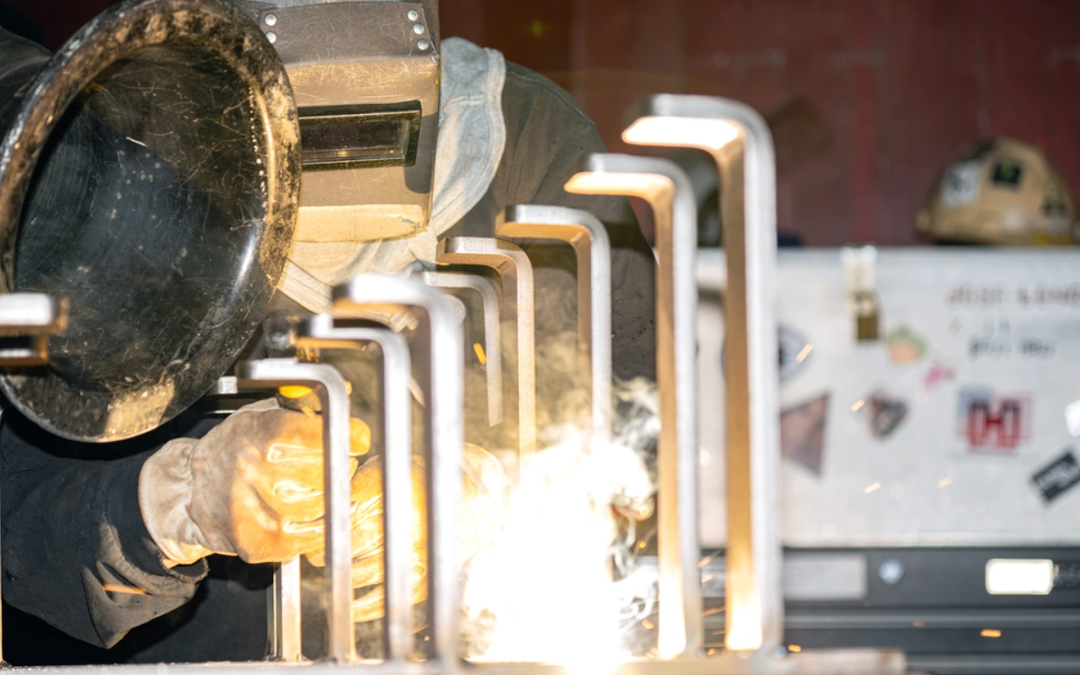
A shipyard can be an excellent place to build a trade career without a university degree. Shipyards build and repair commercial vessels and Navy ships. Jobs range from welding hulls and repairing engines to installing electrical systems, moving equipment, and inspecting completed work.
Work may take place outdoors, inside a vessel, high above deck, or in a narrow tank with limited ventilation. Weather, noise, deadlines, shift work, and overtime are part of life at some yards. Ask employers about schedules and overtime before accepting a job.
Shipbuilding depends on teamwork. A shipfitter prepares steel sections, a welder joins them, and other trades install pipes, cables, and equipment. If one job falls behind, another crew may have to wait. Employers value punctuality, clear communication, careful listening, and safe work habits even in new hires.
Getting started with entry-level shipyard jobs
Common entry-level shipyard jobs include general laborer, trade helper, material handler, fire watch, and trainee positions. Some yards provide job-specific instruction for beginners. Requirements vary: a role may require certification, a physical exam, drug screening, a background check, or site-access approval.
A fire watch may be a practical starting point for someone interested in ship repair. During certain hot-work operations, such as welding and torch cutting, a trained watch keeps an eye out for sparks, smoke, or fire in nearby spaces. This can include checking the opposite side of a bulkhead, where heat or sparks may reach materials not visible from the work area. NFPA, NAVSEA, or OSHA require fire watches in specific circumstances; a watch isn’t automatically required for every hot-work task. See the rules in OSHA’s shipyard fire-watch standard.
Fire watch work requires focus and the confidence to raise an alarm or stop work when necessary. Review fire watch duties during hot work and Illustra Pro’s fire watch training, then confirm the employer’s requirements.
General laborers move materials, clean work areas, prepare equipment, and support repairs. Trade helpers work alongside experienced craftspeople, fetching tools, positioning parts, preparing joints, and learning to read drawings. Both roles let new hires see different trades before choosing a specialty.
Deck support jobs may involve handling lines, maintaining equipment, and carrying out routine checks aboard tugs or support vessels. Some require maritime credentials or prior sea time, so check the posting.
Trades to consider as you gain experience
Shipfitters use engineering drawings to fit steel sections that form a vessel’s hull, decks, and internal structure. They measure, cut, and position heavy pieces and prepare joints for welding. Accurate alignment matters because errors can delay later trades or affect the finished structure.
Welders join steel plates, pipes, and other components. Beginners may prepare material or assist experienced workers before qualifying for specific welding processes. Different jobs require different tests, and one qualification does not cover every assignment. Where fumes are hazardous, ventilation and suitable respiratory protection matter. See welding fume and gas safety.
Pipefitters install lines for fuel, seawater, steam, hydraulic fluid, and other systems. They measure pipe runs, fit connections, and work around machinery, sometimes in tight spaces. The job suits people who enjoy practical problem-solving and accurate measurement.
Marine electricians install and test wiring, lighting, panels, and communications equipment. They read drawings and learn to work safely around electrical energy. Maritime electrical safety training can introduce key hazards, but it does not replace task-specific instruction.
Riggers help move heavy equipment and structural pieces using cranes, hoists, and slings. They check lifting gear, understand load limits, and communicate with crane operators. The work requires proper training and authorization; Rigger Level 1 training may apply to some jobs.
Pay varies with location, union agreements, trade, shift, and qualifications. Defense work may pay differently from a small repair yard, and overtime can affect annual earnings. For example, General Dynamics Bath Iron Works lists a $31.31 starting wage for trade positions. That is not a national rate, so compare current local job postings.
Apprenticeships and shipyard jobs with no experience
If you’re looking for shipyard jobs with no experience, check whether an apprenticeship fits your plans before paying for separate courses. Apprentices earn wages while learning on the job and in class, but program length, entry tests, trades, and pay progression vary.
The Navy’s four public shipyards offer apprenticeships combining shop work and classroom instruction. Pearl Harbor Naval Shipyard describes a four-year program with at least 7,200 hours across on-the-job training, trade theory, and academic study. Graduates earn an Applied Trades associate degree through Honolulu Community College and a Department of Labor certificate. Check the official NAVSEA apprenticeship pages for current trades and pay.
HII’s Newport News Shipbuilding also runs a tuition-free Apprentice School covering multiple trades, along with marine trades training routes for selected applicants. Requirements and recruitment options vary, so consult HII’s current listings rather than relying on old salary or eligibility figures.
Before applying, gather school transcripts, work history, and references if requested. Be ready to explain why you want a trade and what you have done to prepare, even if that only means completing an introductory safety course or practicing basic math and simple measurements. Selection teams may look for attendance, reliability, and the ability to learn, not just previous industrial experience.
Cards, clearances, and safety training
Access rules vary by site. People who need unescorted access to secure maritime facilities may need a Transportation Worker Identification Credential (TWIC), which requires identity checks and a security threat assessment. Review current fees and eligibility through the TSA TWIC program. A TWIC is not a Department of Defense security clearance; clearances apply to certain defense roles, not every shipyard job.
OSHA’s 10-hour Maritime Outreach course introduces common hazards and workers’ rights. OSHA considers Outreach training voluntary at the federal level, although employers, contracts, unions, or training programs may require it. Read job postings carefully. Our OSHA 10-Hour Maritime course covers confined spaces, electrical hazards, maritime fall protection, fire, and PPE.
Why confined spaces demand extra care
Tanks and other enclosed ship spaces can contain flammable vapors, toxic residues, or too little oxygen to support life. Before workers enter, the employer must follow the applicable procedures for inspection, atmospheric testing, ventilation, and communication. Depending on the space, evaluation by a competent person or certified Marine Chemist may be required.
Under OSHA’s shipyard rules, oxygen generally must be at least 19.5 percent and below 22 percent by volume; flammable vapors must be below 10 percent of the lower explosive limit; and toxic substances must stay within applicable exposure limits. Ventilation depends on the space and hazard, so no single airflow figure fits every compartment. Never enter based on appearance alone. Read about maritime confined-space hazards.
Career options beyond hands-on production
Experienced workers may move into lead, supervisor, planning, or training roles. Others enter quality assurance or non-destructive testing (NDT), inspecting materials and welds without cutting them apart. Methods include visual inspection; magnetic particle or dye penetrant testing for surface flaws; ultrasonic testing for internal defects; and radiography when required. NDT qualifications depend on the method, industry code, and job.
Progress is not automatic or tied to a fixed timetable. Reliability, safe habits, drawing-reading skills, basic math, and a willingness to learn help in almost any trade.
Comparing no experience shipyard jobs
Listings for “no experience shipyard jobs” can cover very different work. The highest advertised wage is not always the best starting point. Consider the work itself: fire watch requires sustained attention, laboring can involve repetitive lifting, welding demands practice and comfort with protective gear, and electrical work calls for careful procedures and detailed troubleshooting. If working in enclosed spaces or at heights would be difficult for you, ask how often the role involves those conditions. There is no need to commit to a trade just because it pays well on paper.
During an interview, ask what training new hires receive, what tools or protective equipment they must bring, how overtime is assigned, and what a typical first month looks like. Ask whether the role leads to a trade apprenticeship or whether you would need to apply separately. These questions help reveal whether a position is a genuine training opportunity or simply a short-term labor job. They also make it easier to compare offers with different hourly rates, schedules, benefits, and advancement prospects.
Finding shipyard entry-level jobs near you
Search for “shipyard entry-level jobs” alongside your city or region, then check nearby shipyards’ own careers pages for current openings. Compare requirements before paying for training. Confirm any TWIC, OSHA 10 Maritime, physical, drug screening, or background check requirements with the employer. Review basic algebra and geometry if an apprenticeship test is likely.
Choose training for a specific purpose. At Illustra Pro, we recommend confirming what an employer accepts before enrolling in OSHA 10 Maritime training. Completing a required course can help you prepare for a role, but it does not guarantee employment.